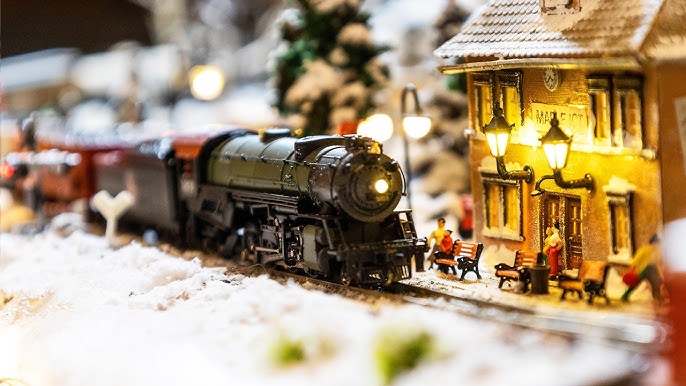
There is much more to a model railroad than just locomotives and lines. It provides a chance to replicate the ambiance of actual railroads, complete with cities, scenery, businesses, and everyday life. Attention to detail turns a collection into a little universe that tells a tale, whether you are creating a room-sized layout or a small display.
Combining high-quality equipment with careful preparation is one of the greatest methods to get this degree of realism. For enthusiasts who desire dependable performance while crafting scenarios that evoke the allure of actual railroads, Lionel train sets provide a solid foundation.
Before Building, Start With A Story
Every iconic railroad design starts with a goal. Consider the symbolism of your railway rather than arranging the lines at random. It might be an industrial zone that links companies and warehouses, a quiet rural village serviced by a small passenger rail, or a bustling freight line that crosses mountain ranges.
Every decision, from the selection of buildings to the kind of rolling stock that should be included in the layout, may be guided by a distinct theme. Every segment seems cohesive and plausible when the plot is constant.
Create A Track Plan That Is Organic
Seldom do real railroads have unending straight lines or perfect circles. They traverse rivers, twist around hills, follow the terrain, and link significant locations.
Incorporate stations, passing sidings, switching yards, and gradual bends into your layout design. Careful track configurations may give the appearance of a much bigger train system, even on a tiny table. Make sure there is enough space between trains so that buildings, roads, and landscape can breathe.
Additionally, planning ahead of time greatly facilitates future development.
Construct Depthful Landscapes
The illusion that trains are passing through a real location is produced by realistic scenery. Lakes, woods, hills, valleys, and steep cliffs all give a layout personality.
Use foam, plaster, or other landscaping materials to create various elevations rather than keeping everything level. Viewers are encouraged to investigate every area of the show by the visual attraction created by elevated lines that span bridges or tunnels that vanish into mountains.
Even simple layouts look bigger than they really are when scenery is layered.
Include Towns You Feel Like You Live In
Towns should represent everyday life rather than just occupying vacant space because a railroad benefits communities.
Incorporate residences, educational institutions, small enterprises, parks, churches, and public structures that correspond with the time period of your railroad. Roads should organically link to walkways, parking spaces, and crossings. Benches, lamps, bicycles, and mailboxes are examples of little things that contribute to a realistic mood without taking over the scene.
People engaging in routine tasks provide the arrangement with vitality and a sense of life.
Establish Industrial Activity
A significant portion of many railroads are involved in freight operations. Realistic destinations for freight vehicles include factories, shipping yards, distribution facilities, warehouses, and grain elevators.
The reasons why trains stop at certain places may be explained by loading docks, piled pallets, forklifts, storage tanks, and building supplies. Because every movement has a logical function, these operational nuances also make operating trains more interesting.
A railroad’s industrial scenery often turns into some of its more fascinating sections.
Use Weathering Sensibly
Everything is impacted by nature. Roads exhibit wear and tear, buildings fade in the sun, trains gather dust, and rails corrode.
Subtle weathering adds reality without giving the impression that everything has been abandoned. A believable setting is created with light-aged freight cars, fading roofs, worn concrete, and patches of grass growing next to tracks.
Balance is the aim. A convincing impression is produced by just the right amount of weathering, but too much might detract from the plan.
Add Natural And Seasonal Details
Surprisingly, little environmental changes have a big influence. The natural environments present along actual train tracks are recreated with the aid of trees of various heights, bushes, flowers, fences, telephone poles, waterways, and animals.
Even seasonal layouts with fall foliage, winter snow, or spring flowers are made by certain enthusiasts. These shifting surroundings provide new chances for imaginative photography and keep exhibits interesting.
Visitors may better immerse themselves in the small world by paying attention to these minute features.
Conclusion
It takes a lot of imagination, preparation, and attention to detail to create authentic train scenery. Each hill, structure, tree, and rail line adds to the overall narrative that makes miniature railroading come to life. Hobbyists may create layouts that replicate the thrill and beauty of actual train service by carefully planning landscapes, adding genuine villages, and choosing reliable equipment. Every train sight may be transformed into a world worth discovering with perseverance and creativity.